
The word Miskeen meaning in Arabic refers to someone who is needy, humble, or in a state of poverty. In simple words, a miskeen is not just poor in wealth but can also be weak, dependent, or in need of help. Understanding the miskeen Arabic meaning helps us grasp its deeper emotional and social context in daily life. The miskeen definition of Arabic extends beyond money to include vulnerability and humility.
Many people confuse Miskeen meaning in Arabic with being lazy or helpless, but it carries respect and empathy in Islamic culture. For example, the Miskeen in the Quran is often mentioned as someone deserving care, charity, and attention. Learning the meaning of Islam opens doors to understanding Arabic words like masakeen and how they relate to compassion and social responsibility.
In everyday conversations, knowing Miskeen meaning in Arabic can help you use it properly and avoid mistakes. It is a word that shows empathy and respect for others. With the right usage, you can connect deeply with Arabic culture and its values. The misuse of usage in Arabic often appears in sentences about charity, kindness, and social justice.
1. Simple Definition of the Word “Miskeen.”
The miskeen meaning in Arabic refers to someone who is needy, weak, or facing hardship in life. In simple terms, the meaning of miskeen in English is “poor,” but it carries more emotional depth. The Arabic meaning often reflects dignity and patience. Many learners ask, What does miskeen mean, and the answer includes both financial and emotional struggle.
The Arabic word miskeen is not just about money. It also shows compassion and kindness toward someone in difficulty. This is why the meaning of the Arabic definition is broader than a simple translation. Through miskeen meaning with examples, you can see how the word expresses empathy. Understanding how to use Miskeen quickly makes it easier to use in daily conversations.
2. Literal vs Contextual Meaning of Miskeen
The literal miskeen meaning in Arabic focuses on poverty and need. In this sense, the Miskeen translation of English is “needy” or “poor.” However, language is not always direct. The linguistic meaning of miskeen shows that the word also carries emotional depth and human connection beyond financial hardship.
In context, the word changes meaning based on tone. The emotional meaning of miskeen in Arabic can express sympathy, care, or concern. For example, in daily conversation using miskeen, someone may say it to comfort a friend. This shows how Arabs use the word miskeen in real life, making it soft and respectful rather than harsh.
3. Linguistic Root of the Word “Miskeen.”
The miskeen root word Arabic comes from the root letters س-ك-ن. This root relates to stillness and calmness. The Arabic root s k n meaning suggests a person whose situation has become restricted or stuck. This explains the deeper meaning in Arabic beyond just poverty.
The linguistic meaning of miskeen shows a person who cannot move forward easily due to hardship. This idea helps answer Who is considered a miskeen in Islam. By studying roots, learners gain a better, easier explanation of the meaning and understand how Arabic words carry powerful meanings.
4. Arabic Root Letters and Their Significance
The root س-ك-ن forms many Arabic words. These include “sukoon” and “maskan.” These words relate to calmness and stillness. This connection strengthens the miskeen meaning in Arabic and explains its depth. It also expands your Arabic vocabulary, including related words.
Understanding root letters helps you see how meanings connect. The miskeen grammar of Arabic depends on these roots. This knowledge supports how to understand Miskeen quickly and improves learning. It also shows how one root can create many meaningful words in Arabic.
5. Grammatical Forms of Miskeen in Arabic
The miskeen singular and plural forms change depending on gender and number. This makes the word flexible in use. The miskeen plural masakeen is often used in religious texts. Understanding these forms helps you learn How to use miskeen in sentences correctly.
Grammar plays an important role in meaning. The miskeen usage in Arabic becomes clearer when you know its forms. This also helps avoid common mistakes using miskeen. Learning grammar improves fluency and gives a strong foundation in understanding the miskeen meaning in Arabic.
6. Singular, Dual, and Plural Forms of Miskeen
The miskeen meaning in Arabic changes slightly when you use singular, dual, or plural forms. The singular is مِسْكِين (Miskeen) for a man and مِسْكِينَة (Miskeena) for a woman. The dual is rarely used in daily speech. The plural is مَسَاكِين (Masakeen), which appears often in the Miskeen in the Quran. Understanding these forms helps with miskeen usage in Arabic.
Using the correct form ensures respect and clarity. The miskeen plural masakeen highlights groups in need, while the singular focuses on one person. Knowing the singular and plural forms is essential in Miskeen Islamic meaning and daily conversations. Proper use avoids confusion and reflects cultural sensitivity.
| Form | Arabic | English Meaning | Usage Example |
| Singular M | مِسْكِين | Miskeen (male) | هذا الرجل مِسْكِين يحتاج للطعام |
| Singular F | مِسْكِينَة | Miskeena (female) | هذه المرأة مِسْكِينَة تحتاج للمساعدة |
| Dual | مِسْكِينان | Two Miskeen | Rarely used, mostly in formal texts |
| Plural | مَسَاكِين | Masakeen (group) | ساعد المَسَاكِين في رمضان |
7. How to Pronounce “Miskeen” Correctly
Correct mispronunciation is important for proper understanding. The word is pronounced “mis-keen” with emphasis on the second syllable. Many learners confuse it with a long vowel sound, but the correct Miskeen meaning in Arabic requires a soft and respectful tone. Pronouncing it correctly helps in reading Miskeen in the Quran and using it naturally in conversations.
Using proper pronunciation reflects respect and understanding. When saying Miskeen, remember it conveys empathy and humility. Correct use improves your Arabic vocabulary and skills and helps in both religious and daily settings. Mispronouncing it can change the Miskeen Islamic meaning or sound disrespectful.
8. Miskeen Meaning in Classical Arabic
In classical Arabic, Miskeen, meaning in Arabic, refers to someone who is helpless or in deep need. The word carries strong moral and spiritual connotations, often used in the Quran. The Arabic word miskeen highlights humility and dependence on Allah, not just financial poverty. Scholars explain it as a person requiring support with dignity and patience.
Classical texts use the Miskeen translation of English to describe both physical and emotional hardship. Understanding this form strengthens your knowledge of miskeen usage in Arabic and helps you read religious texts accurately. Classical use also teaches compassion toward the needy in society.
9. Miskeen Meaning in Modern Arabic Usage
Today, Miskeen meaning in Arabic, is used in everyday conversations to show sympathy. People often say “ya miskeen” to express care for someone facing difficulty. Modern Arabic keeps the moral value, but the word is flexible in tone and context. It reflects social understanding in daily life and the media.
Miskeen, Arabic meaning in modern use, also appears in literature, news, and online discussions. It conveys both financial need and emotional vulnerability. Learning the modern usage improves your Arabic vocabulary miskeen and helps in real-life situations. Proper tone ensures respect and avoids offense.
10. Examples of Miskeen in Arabic Sentences
Here are clear examples showing misspelling usage in Arabic. One sentence is: هذا الرجل مِسْكِين ولا يملك مالًا (“This man is miskeen and has no money”). Another: ساعد المَسَاكِين في رمضان (“Help the masakeen during Ramadan”). These illustrate Miskeen Islamic meaning and social respect.
Examples also appear in emotional or daily contexts. For instance: الطفل المِسْكِين يحتاج للطعام (“The poor child needs food”). Using these sentences improves understanding of miskeen meaning in real-life situations and makes learning practical. They highlight the word’s role in kindness and empathy.
11. Daily Conversation Examples Using Miskeen
In daily speech, Miskeen meaning in Arabic shows empathy and care. Friends may say “ya miskeen” when someone is tired or stressed. It reflects compassion, not pity, and strengthens social bonds. Learning daily examples helps use the word naturally.
Common phrases include: هذا الشخص مِسْكِين جدًا اليوم (“This person is very miskeen today”) or ساعد المِسْكِين عندما تستطيع (“Help the miskeen whenever you can”). These show miskeen meaning with examples and make conversations respectful and meaningful. Proper usage builds trust and understanding.
12. English Sentences Using the Word Miskeen
The Miskeen meaning in Arabic can be used in English sentences to show empathy and understanding. For example, you might say, “He looked like a miskeen after losing his job.” Using the Arabic word miskeen in English helps learners connect the cultural and Islamic context.
You can practice miskeen usage in Arabic by including it in sentences about need, compassion, or humility. Here are some examples of miskeen meaning with examples in English:
- “The miskeen child waited quietly for food, showing patience beyond his years, highlighting the Miskeen Islamic meaning of humility.”
- “She helped the masakeen, meaning in her neighborhood, reflecting the importance of helping the needy in Islam and spreading kindness.”
- “Seeing someone struggle, he whispered ‘ya miskeen,’ a simple phrase that carries emotional meaning of miskeen in Arabic.”
- “During Ramadan, donating to the miskeen plural masakeen is not just charity but an act that strengthens faith and community bonds.”
- “Teachers often explain Miskeen in the Quran through stories that show the cultural meaning of Miskeen in Arab society and moral lessons.”
Using the miskeen translation of English this way helps learners understand real-life situations and makes the word more meaningful. Always pair the miskeen definition Arabic with context to show care and respect.
13. When and How to Use Miskeen Properly
Using Miskeen meaning in Arabic correctly shows respect and empathy. You should say miskeen gently to someone in difficulty or when telling a story about someone in need. Avoid using it sarcastically, as it can hurt feelings. In Islamic teachings, the Miskeen Islamic meaning encourages helping others and showing patience toward the poor.
In daily speech, misuse of the word in Arabic can describe emotional hardship, not just financial poverty. For example, saying “ya miskeen” to a tired child or a struggling friend shows care. Learning the meaning with examples helps you use the word naturally while keeping the respect intended in the Quran and Hadith.
14. Difference Between Miskeen and Faqeer
The words miskeen vs faqeer have distinct meanings in Arabic. A faqeer usually has little but enough to survive, while a miskeen often lacks even basic needs. Understanding this difference is crucial for correct miskeen meaning in Arabic and social etiquette. The Quran mentions both, showing levels of poverty and the need for charity.
Using the Faqeer vs. Miskeen difference correctly helps learners respect cultural and religious contexts. While both are eligible for zakat, a miskeen, in Islamic meaning, emphasizes humility and complete dependence on Allah. Learning Arabic vocabulary miskeen ensures you know how to refer to each group properly and respectfully.
15. Miskeen vs Other Arabic Words for Poverty
Miskeen vs other Arabic words for poverty shows nuanced meaning. Unlike faqeer, miskeen can include emotional or temporary hardship. Words like daal or mujtar are more classical and rarely used today. Understanding miskeen meaning in Arabic helps distinguish these subtle differences.
Choosing the right word matters. Using the miskeen usage in Arabic highlights empathy and dignity, while other terms may sound harsh. Learning the meaning in real-life situations ensures accurate communication in daily speech and Islamic contexts. The word carries both cultural and religious weight that other poverty words lack.
16. Key Comparison Table: Miskeen vs Faqeer
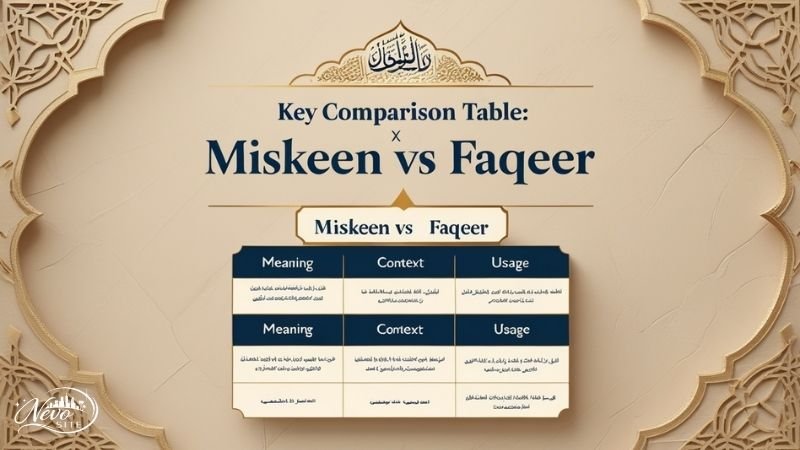
Understanding the difference between Miskeen meaning in Arabic and faqeer is important in Islamic teachings and daily conversation. A miskeen often lacks basic needs and may struggle silently, while a faqeer has some means but is still poor. Knowing the correct usage in Arabic ensures respect and proper context when speaking or reading the Quran.
This table summarizes Miskeen vs. Faqeer clearly. It helps learners see meaningful meaning in real-life situations and use the word properly in sentences or Islamic discussions. Understanding these differences also deepens your grasp of Arabic vocabulary miskeen and its Islamic meaning.
| Feature | Miskeen | Faqeer |
| Financial Status | Has almost nothing; fully dependent | Has little but enough to survive |
| Emotional/Spiritual | May face emotional hardship; silent struggle | Often independent but still poor |
| Eligibility for Zakat | Yes, fully eligible | Yes, fully eligible |
| Quranic Mention | Frequently mentioned with emphasis on humility | Mentioned as a distinct group |
| Social Use | Shows empathy and respect | Highlights need, less emotional focus |
| Common Mistakes | Misused casually or insultingly | Confused with miskeen in meaning |
This comparison clarifies miskeen meaning in Arabic and helps you avoid mistakes. Using the word correctly shows kindness and aligns with the Islamic view of a Miskeen. Proper understanding improves both conversation and reading comprehension of Quranic texts.
17. Quranic Verses About Miskeen
The Miskeen meaning in Arabic is highlighted multiple times in the Quran. Allah emphasizes helping the poor and needy, showing compassion. Verses like “And in their wealth, there is a right for the beggar and the deprived” teach believers to support masakeen. Understanding Miskeen in the Quran helps Muslims practice kindness and mercy daily.
Believers are reminded that the miskeen is not only poor financially but often emotionally vulnerable. The Quran links helping the miskeen to blessings and spiritual growth. Learning the meaning in Islam through Quranic verses strengthens faith and encourages practical charity.
18. Meaning of Miskeen in the Quran
In the Quran, Miskeen meaning in Arabic, refers to someone in need who deserves care and dignity. It highlights humility and dependence on Allah, not just financial hardship. Verses mentioning masakeen’s meaning emphasize that helping them is a moral duty and an act of faith.
Miskeen in the Quran also shows the value of patience and resilience. By learning Miskeen’s Islamic meaning, readers understand the spiritual and social aspects of poverty. This understanding improves both Arabic vocabulary miskeen and awareness of ethical responsibilities.
19. Importance of Helping the Miskeen in Islam
Helping the miskeen is a key principle in Islam. Miskeen meaning in Arabic, teaches believers to offer assistance with respect, whether through charity, food, or emotional support. Zakat and sadaqah are essential ways to fulfill this duty. Understanding miskeen meaning in real-life situations makes generosity meaningful and ethical.
Caring for the Miskeen strengthens community bonds and reflects the Islamic view of a Miskeen. It shows empathy, humility, and gratitude. Following Quranic teachings about Miskeen Islamic meaning ensures that aid is given correctly and respectfully, benefiting both giver and receiver.
20. Hadith About Miskeen Explained

The Prophet Muhammad ﷺ emphasized the miskeen in many hadiths. He prayed, “O Allah, let me live as a miskeen, die as a miskeen, and be raised among the miskeen.” This highlights Miskeen’s meaning in Arabic as spiritual humility, not only poverty. Miskeen, meaning in Islam, includes respect, dignity, and patience.
Hadiths guide believers on how to treat masakeen meaningfully, combining charity and moral behavior. Learning Quranic verses about the Miskeen, explained alongside hadith, strengthens understanding. It ensures that miskeen usage in Arabic respects both the social and spiritual aspects of need.
21. Cultural Meaning of Miskeen in Arab Societies
In Arab culture, Miskeen, meaning in Arabic, is often used to show empathy and respect for someone in difficulty. It is not considered an insult when used gently. The emotional meaning of miskeen in Arabic reflects compassion and social solidarity, connecting language to human values.
The cultural meaning of miskeen in Arab society also teaches humility. Families, neighbors, and communities often help the miskeen silently. Learning the meaning for beginners helps non-native speakers understand how Arabs use the word. This awareness promotes both language skills and cultural sensitivity.
22. Emotional and Social Use of the Word Miskeen
The Miskeen meaning in Arabic goes beyond financial need. It conveys feelings of vulnerability, sympathy, and humility. People often use it to express concern or compassion for someone struggling. Understanding the emotional meaning of miskeen in Arabic helps in social interactions and respectful conversations. Using it wisely shows care and awareness.
In daily life, Miskeen, meaning in Arabic, can reflect social respect and emotional sensitivity. People say it to comfort others or acknowledge hardship without judgment. Learning the correct usage in Arabic enhances communication in Arab communities.
Examples of social and emotional use:
- Saying someone is miskeen when they lost a job, showing empathy.
- Using miskeen to describe someone feeling helpless or sad.
- Offering help by mentioning the misfortune of neighbors or friends.
- Referring to the meaning of charity drives to encourage giving.
- Highlighting emotional struggles without labeling someone as weak, using the meaning in real-life situations.
23. Is Calling Someone “Miskeen” Offensive?
Calling someone Miskeen, meaning in Arabic, can be tricky. In Arabic culture, it is usually respectful and shows empathy. However, tone matters. If said sarcastically, it may seem like an insult. Learning how Arabs use the word miskeen helps avoid misunderstandings. Using it with care shows compassion and cultural awareness.
In daily conversation, Miskeen meaning in Arabic expresses concern or sympathy for someone struggling. It is not meant to belittle. Understanding the emotional meaning of miskeen in Arabic ensures you respect social norms and speak politely.
24. Common Mistakes When Using Miskeen
Many learners misuse Miskeen meaning in Arabic by thinking it only refers to money. Others pronounce it incorrectly or use it as a casual insult. Knowing the mispronunciation and proper usage prevents errors. Misusing the word can offend or confuse listeners.
People also forget that Miskeen, meaning in Arabic, reflects humility and struggle, not just poverty. Using it without context or tone can be misleading. Learning the correct usage in Arabic and observing local examples makes conversations clear and respectful.
25. Misconception: Miskeen Only Means Poor
A common misunderstanding is that Miskeen, meaning in Arabic, only means “poor.” In reality, it includes emotional, social, and financial struggles. Someone may be miskeen in spirit, even if they have material wealth. Recognizing this deeper meaning improves cultural understanding.
The Miskeen, meaning in Arabic, also teaches humility and empathy. Islam highlights the Islamic meaning as someone deserving kindness. Misconceptions reduce respect, but learning the full context ensures accurate usage in both conversations and Quranic studies.
26. Misuse of Miskeen in Casual Conversations
Many people misuse Miskeen meaning in Arabic in everyday talks. They may say it jokingly or sarcastically, which can hurt feelings. Understanding misused usage in Arabic helps prevent awkward situations. The word is meant to show empathy, not mock someone. Misuse can lead to misunderstandings.
Using Miskeen meaning in Arabic casually also ignores its deeper emotional meaning of miskeen in Arabic. It reflects humility, struggle, and respect. Knowing when to use it properly shows cultural awareness. Observing native speakers can guide proper pronunciation, tone, and context.
| Common Misuse | Correct Usage |
| Saying “Miskeen” jokingly to a friend | Express sympathy for someone in real struggle |
| Using it to mock or tease | Use only to show respect and empathy |
| Ignoring tone | Speak gently and sincerely |
| Overusing in casual chat | Use sparingly to maintain meaning and respect |
27. Why Learning Miskeen Meaning in Arabic is Important
Understanding Miskeen meaning in Arabic is essential for anyone learning Arabic or studying Islamic culture. It helps you grasp the linguistic meaning of miskeen and its emotional and social uses. Knowing the word also aids in understanding Miskeen in the Quran, Hadith references, and cultural contexts, making your communication respectful and accurate.
Learning miskeen usage in Arabic improves empathy and awareness. You can distinguish between miskeen vs faqeer and other words for poverty. This knowledge also enhances Arabic vocabulary miskeen, allowing you to read texts, conversations, and religious references correctly. Knowing when and how to use the word makes your Arabic more natural.
28. Tips to Remember and Use Miskeen Easily
To use Miskeen meaning in Arabic correctly, start by practicing its pronunciation. Repeat the singular, dual, and plural forms, such as miskeen singular and plural: masakeen. Context matters, so observe how Arabs use the word in real life for empathy, not insult.
Another tip is to connect the word with its emotional meaning of miskeen in Arabic. Make sentences, read Quranic examples, and note their appearance in daily conversations. Using flashcards or real-life examples improves memory. Understanding the meaning in real-life situations ensures proper use in social and religious contexts.
Conclusion
In summary, Miskeen meaning in Arabic goes beyond just being poor. It reflects emotional, social, and cultural depth. Understanding Miskeen usage in Arabic helps you communicate respectfully and grasp Miskeen in the Quran. Using it properly shows awareness of Islamic and Arab traditions.
Learning Miskeen meaning in Arabic improves your Arabic vocabulary and daily communication skills. Knowing the difference between miskeen and faqeer ensures accurate use. Observing the word in conversations, Quranic verses, and Hadith enhances comprehension. This knowledge strengthens both language skills and cultural understanding.
FAQs
What does Miskeen mean in Arabic?
Miskeen meaning in Arabic, refers to someone poor, needy, or helpless, often carrying emotional and social significance in Islam and Arab culture.
How is Miskeen different from Faqeer?
The Faqeer vs. Miskeen difference lies in context: Miskeen often implies vulnerability and humility, while Faqeer emphasizes financial poverty.
How do you pronounce Miskeen correctly?
Miskeen pronunciation is “mis-keen,” stressing the second syllable, and it is crucial for proper use in conversations and religious contexts.
What is the singular and plural of Miskeen?
The miskeen singular and plural forms are Miskeen for one and Masakeen for many, often seen in Quranic verses and daily speech.
Can Miskeen be used in daily conversations?
Yes, daily conversation using miskeen is common in Arabic, but the tone matters to avoid offending anyone. Examples include asking about someone’s well-being or struggles.
What is the root word of Miskeen in Arabic?
The miskeen root word Arabic is s-k-n, indicating stillness, helplessness, or dependency, giving the word its linguistic and emotional depth.
Is Miskeen only about being poor?
No, the miskeen meaning in real-life situations extends beyond poverty to include emotional need, helplessness, or social vulnerability.
What does Miskeen mean in Islam?
Miskeen, meaning in Islam, refers to those deserving charity and help, highlighting the importance of Zakat and Miskeen explanation in religious teachings.
Are there common mistakes using Miskeen?
Yes, common mistakes using miskeen include overgeneralizing it as an insult or using it casually without understanding its emotional and cultural meaning.
Why is learning Miskeen important in Arabic?
Learning the Arabic word Miskeen and its meaning for beginners improves language skills, cultural awareness, and understanding of Quranic and Hadith contexts.

Written by Saeeda Gull Welcome to Neto Site! I am Saeeda Gull, a SEO Content Writer and SEO specialist.With over 1 year of experience, I create meaningful, engaging, and high-quality digital content that connects with readers and ranks well online.