
AFAIK meaning stands for “As Far As I Know.” It is a popular internet slang term used in online communication when someone shares information but is not completely sure about it. The AFAIK meaning in text helps people sound honest and avoid making statements that seem 100% certain. This common chat abbreviation is widely used in messages, forums, and social media conversations.
Have you ever seen AFAIK in a text and wondered what it means? You are not alone. Many people come across this AFAIK acronym while chatting online and feel confused. Understanding the AFAIK meaning online can help you follow conversations more easily and improve your knowledge of modern texting language and digital communication.
In this guide, you will learn how to use AFAIK correctly, where it is commonly used, and why it remains an important part of today’s online world. We will also look at examples, common mistakes, and how AFAIK compares with terms like IDK (I Don’t Know) and IMO (In My Opinion). By the end, you will feel more confident using this popular expression in everyday I’ve written the requested section in a reusable format.
1. AFAIK at a Glance
AFAIK is a short form used in online conversations. It stands for “As Far As I Know.” People use it when they share information but are not completely certain. The term is common in online communication, texting language, and modern internet culture.
Understanding the Afaik meaning helps you read messages more clearly. It is a simple way to express limited knowledge without sounding overly confident. This popular chat abbreviation is widely used across different platforms.
| Term | Meaning |
| AFAIK | As Far As I Know |
| Type | Acronym |
| Usage | Informal Communication |
| Common Places | Texts, Social Media, Chats |
| Purpose | Show Limited Certainty |
2. AFAIK Meaning in Texting
The Afaik meaning in texting is “As Far As I Know.” People use it when they believe information is correct but cannot fully confirm it. It helps make conversations sound honest and natural.
In modern texting slang, AFAIK, meaning is one of the most recognised abbreviations. It saves time while typing and improves digital communication between users.
Personal Text Messages
In personal messages, AFAIK is often used when discussing plans, events, or information. It allows the sender to share knowledge without claiming absolute certainty.
Examples include:
- AFAIK, the movie starts at 7 PM.
- AFAIK, she already completed the project.
- AFAIK, the shop is still open.
- AFAIK, they are coming tomorrow.
- AFAIK, the package was delivered.
- AFAIK, he has not replied yet.
- AFAIK, the meeting is cancelled.
- AFAIK, the tickets are available.
- AFAIK, the teacher approved it.
- AFAIK, the game begins tonight.
Group Chats
Group chats often move quickly. AFAIK helps users provide information without appearing too certain.
Examples include:
- AFAIK, everyone agreed to the plan.
- AFAIK, the event starts at noon.
- AFAIK, the update is complete.
- AFAIK, nobody objected.
- AFAIK, the payment was sent.
- AFAIK, the venue has changed.
- AFAIK, registration is still open.
- AFAIK, they confirmed attendance.
- AFAIK, the schedule remains the same.
- AFAIK, the issue has been fixed.
3. AFAIK Meaning on Social Media
The Afaik meaning is commonly seen on social networking sites. Users often share opinions, updates, and information while acknowledging that they may not know every detail.
Many people use AFAIK because it sounds polite and transparent. It prevents misunderstandings and encourages open discussions among users.
The term has become a common part of social media slang and modern internet communication. It appears in comments, replies, and discussion threads every day.
On Facebook, AFAIK is often used in community groups and comment sections. Users share information while leaving room for corrections from others.
Instagram users may use AFAIK in captions, comments, or story replies. It helps keep conversations friendly and informative.
X (Twitter)
On X, short messages are important. AFAIK fits perfectly because it saves space and clearly communicates uncertainty.
Common uses include:
- News discussions
- Community updates
- Product reviews
- Event announcements
- Opinion-based conversations
4. AFAIK Meaning in Online Chat
The Afaik meaning is also popular in live conversations across the internet. People use it when sharing information that may need verification.
It helps users avoid sounding overly confident. This creates more trustworthy and respectful conversations.
As a common internet slang term, AFAIK continues to be useful in many online environments.
Messaging Apps
Messaging apps like WhatsApp and Telegram frequently feature AFAIK. It allows users to answer questions quickly while showing uncertainty.
Live Chat Platforms
Live chat platforms often involve fast communication. AFAIK helps participants respond efficiently without making definite claims.
Popular situations include:
- Customer support chats
- Gaming chats
- Study groups
- Team discussions
- Community conversations
5. How to Pronounce AFAIK Meaning
Many people know the meaning of AFAIK, but are unsure how to say it aloud. Fortunately, the pronunciation is simple and easy to remember.
Although AFAIK is mainly written, it may occasionally appear in spoken conversations among internet users familiar with the term.
Correct Pronunciation
Most people pronounce it letter by letter:
“AY-FAKE”
Some users also say:
“A-F-A-I-K”
Both versions are generally understood in informal conversations.
6. Full Form of AFAIK Explained
The AFAIK acronym stands for “As Far As I Know.” Each word contributes to the overall meaning of limited certainty.
The phrase allows people to communicate information honestly without claiming complete accuracy.
As
The word “As” introduces a comparison or limit. It prepares the listener for the information that follows.
Far
“Far” refers to the extent of someone’s knowledge. It indicates how much information the speaker currently has.
As I
The words “As I” make the statement personal. They show that the information comes from the speaker’s own understanding.
Know
“Know” represents the speaker’s current knowledge. Together, the phrase means “based on what I currently know.”
7. The Origin and History of AFAIK
The history of AFAIK goes back to the early internet era. Users needed faster ways to communicate online, leading to the creation of many abbreviations.
As internet communities grew, AFAIK became a common part of internet terminology. It spread across forums, chat rooms, and messaging platforms.
The abbreviation survived because it remained useful and easy to understand. Today, it is recognised by millions of users worldwide.
Early Internet Usage
During the early days of the web, internet users relied on short forms to save typing time. AFAIK became one of the most practical expressions.
Forum Era
Discussion forums helped popularize AFAIK. Users frequently used it while answering questions and sharing advice.
Modern Internet Usage
Today, AFAIK appears across social media, chat apps, and online communities. It remains an important part of modern online communication.
| Period | Development |
| Early 1990s | Appeared in internet chat rooms |
| Late 1990s | Spread through forums |
| Early 2000s | Became common in messaging |
| 2010s | Expanded to social media |
| 2020s–2026 | Widely used across digital platforms |
conversations.
8. Why People Use AFAIK
The Afaik meaning is popular because it helps people share information without sounding completely certain. It allows users to express their thoughts honestly while leaving room for correction. This makes conversations more natural and trustworthy.
In today’s online communication and digital communication, people often discuss topics they may not fully know. AFAIK helps them participate confidently without presenting assumptions as facts.
To Avoid Mistakes
Many people use AFAIK when they are unsure about details. It helps prevent spreading incorrect information and reduces the chance of misunderstandings.
By using AFAIK, users acknowledge that their knowledge may be limited. This simple habit encourages more accurate conversations and responsible communication.
To Sound Polite
AFAIK makes statements sound softer and more respectful. Instead of appearing overly confident, the speaker sounds open to other viewpoints.
This is especially useful in online discussions where different opinions are common. A polite tone often leads to better conversations.
To Share Limited Knowledge
Sometimes people know part of the answer but not the complete picture. AFAIK allows them to contribute useful information while being honest about uncertainty.
The phrase acts as a disclaimer. It tells readers that the information is based on current knowledge rather than confirmed facts.
To Reduce Arguments
Arguments often happen when people present assumptions as facts. AFAIK helps reduce this problem by showing uncertainty from the beginning.
When users communicate this way, discussions become more cooperative. Others are more likely to share additional information instead of debating aggressively.
Common reasons people use AFAIK:
- To avoid mistakes
- To sound polite
- To share partial knowledge
- To reduce arguments
- To show honesty
- To encourage discussion
- To improve communication clarity
9. Psychology Behind Using AFAIK
The Afaik meaning reflects interesting human behavior. People naturally want to share information while protecting themselves from being completely wrong.
In many situations, AFAIK acts as a safety phrase. It helps users communicate confidently without making absolute claims.
Avoiding Misinformation
People often use AFAIK to avoid spreading false information. The phrase reminds readers that the information may need verification.
This small disclaimer promotes more responsible communication. It encourages others to double-check important facts.
Showing Humility
Using AFAIK demonstrates humility. It shows that the speaker understands their knowledge may not be complete.
This approach creates a positive impression. People often trust those who openly acknowledge uncertainty rather than those who pretend to know everything.
Managing Expectations
AFAIK helps manage expectations during conversations. It signals that the information is based on current understanding.
When expectations are clear, misunderstandings become less common. This is one reason the phrase remains popular in texting language and online communities.
10. How to Use AFAIK Correctly
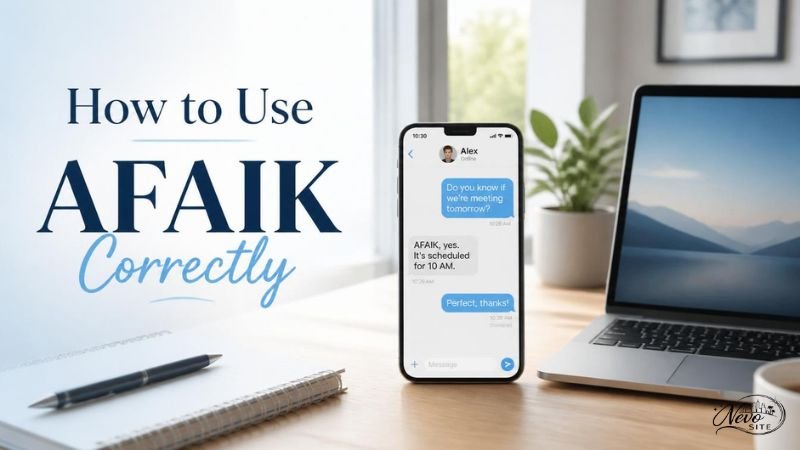
Understanding the Afaik meaning is important, but using it correctly is equally important. The phrase should be used when information is likely true but not fully confirmed.
It works best in informal settings. Using it naturally helps improve communication without creating confusion.
Sentence Structure
AFAIK is usually placed at the beginning of a sentence. It can also appear in the middle when needed.
Examples include:
“AFAIK, the meeting is tomorrow.”
“The project is complete, AFAIK.”
Context Matters
The context of the conversation matters. AFAIK works well in casual settings but may not fit highly formal situations.
Understanding your audience helps you decide whether the phrase is appropriate. Different situations require different communication styles.
Best Practices
Good usage makes conversations clearer and more effective. Users should apply AFAIK only when genuine uncertainty exists.
Best practices include:
- Use it when unsure
- Keep it natural
- Avoid overusing it
- Use it in casual conversations
- Verify important facts
- Consider your audience
- Stay honest
- Be respectful
11. When Should You Use AFAIK Meaning?
The Afaik meaning is most useful when sharing information that may not be fully confirmed. It allows you to contribute to discussions while remaining honest about uncertainty.
This phrase is common in informal communication, online communities, and everyday digital conversations. It helps maintain a balanced and respectful tone.
Casual Chats
Casual chats are one of the best places to use AFAIK. Friends often exchange information that may not be completely verified.
The phrase helps keep conversations friendly and flexible. It also prevents people from sounding overly certain.
Discussions
AFAIK works well during discussions and debates. It shows that you are offering information based on your current understanding.
This encourages constructive conversations. Others may feel more comfortable adding their own perspectives.
Workplace Messages
In some workplace communication settings, AFAIK can be useful. It helps employees provide updates without making guarantees.
Examples of when to use AFAIK:
- Casual chats with friends
- Online discussions
- Group conversations
- Community forums
- Workplace messages
- Messaging apps
- Social media comments
12. When NOT to Use AFAIK Meaning
Although AFAIK is helpful, it is not suitable everywhere. Some situations require precise and verified information.
Using AFAIK in highly formal settings may reduce credibility. It can make important statements appear uncertain.
Official Documents
Official documents require accuracy and professionalism. AFAIK introduces uncertainty, which may not be acceptable in formal records.
Clear and verified language is usually preferred in official writing.
Legal Communication
Legal communication depends on precise facts and accurate wording. Uncertain phrases can create confusion or misunderstandings.
For legal matters, always use verified information instead of assumptions.
Academic Writing
Academic writing requires evidence-based information. AFAIK Meaning does not meet the standards expected in research papers or scholarly work.
Students and researchers should use credible sources rather than conversational phrases.
Situations where AFAIK should be avoided:
- Official documents
- Legal communication
- Academic writing
- Research papers
- Government reports
- Contracts
- Formal client communications
13. AFAIK Meaning in Casual Conversations
The Afaik meaning is most commonly seen in everyday conversations. People use it when they want to share information without sounding completely certain. It creates a friendly and honest tone.
In modern texting language and online communication, AFAIK helps people communicate naturally. It is simple, quick, and easy to understand.
Friend Conversations
Friends often use AFAIK when discussing plans, events, or general information. It allows them to give answers while leaving room for corrections.
For example, a friend might say, “AFAIK, meaning the movie starts at 8 PM.” This sounds more flexible than making a definite statement.
Family Conversations
Family members also use AFAIK in chats and messages. It helps them share updates without guaranteeing complete accuracy.
This makes conversations smoother and reduces confusion when information changes later.
Common examples in casual conversations:
- AFAIK, dinner is at 7 PM.
- AFAIK, mom already called.
- AFAIK, the store is open.
- AFAIK, the event is tomorrow.
- AFAIK, they arrived safely.
- AFAIK, the tickets are booked.
- AFAIK, he finished the task.
- AFAIK, the package arrived.
- AFAIK, school starts Monday.
- AFAIK, the game is tonight.
- AFAIK, the meeting was moved.
- AFAIK, everyone agreed.
- AFAIK, the restaurant is busy.
- AFAIK, she is coming later.
- AFAIK, nothing has changed.
14. AFAIK in Workplace Communication
The Afaik meaning is sometimes used in workplace settings. It helps employees provide information while making it clear that they may not have all the facts.
In certain situations, AFAIK Meaning can improve workplace communication by promoting honesty and transparency. However, it should be used carefully.
Team Chats
Team chats often involve quick updates and discussions. AFAIK helps team members share information without making promises.
It is useful when information is still being confirmed. This helps avoid misunderstandings within the team.
Internal Messages
Internal company messages are usually less formal than official documents. AFAIK can be appropriate when discussing project updates or schedules.
Employees often use it to clarify that information is based on current knowledge rather than final decisions.
Slack & Teams
Platforms like Slack and Microsoft Teams encourage quick communication. AFAIK fits naturally into these environments.
Because these tools focus on speed and collaboration, users often prefer short and practical expressions.
15. Is AFAIK Meaning Professional?

Many people wonder whether AFAIK is professional. The answer depends on the situation and audience.
In informal workplace settings, AFAIK can be acceptable. In highly formal communication, it is usually better to use complete phrases.
Acceptable Situations
AFAIK works well in internal conversations where team members understand common internet terminology and workplace abbreviations.
It helps create clear expectations and avoids presenting assumptions as facts.
Situations to Avoid
Formal reports, client emails, and legal documents usually require more precise language. AFAIK may appear too casual in these settings.
Using professional wording is often a better choice when accuracy is critical.
| Acceptable | Avoid |
| Team Chats | Legal Documents |
| Slack Messages | Client Contracts |
| Internal Discussions | Research Reports |
| Quick Updates | Formal Presentations |
| Casual Work Conversations | Official Statements |
16. Real-Life Examples of AFAIK
The Afaik meaning becomes easier to understand when seen in real situations. People use it every day across different environments.
Whether in school, work, gaming, or social media, AFAIK helps communicate uncertainty in a respectful way.
School
Students often use AFAIK Meaningwhen discussing assignments, schedules, or classroom updates.
Example: “AFAIK Meaning, the test is next Friday.”
Office
Employees may use AFAIK while discussing projects and deadlines.
Example: “AFAIK, the manager approved the proposal.”
Gaming
Gamers frequently use AFAIK in multiplayer chats and community discussions.
Example: “AFAIK, the update will be released tonight.”
Social Media
Social media users often add AFAIK to comments and discussions.
Example: “AFAIK, this feature is only available in the premium version.”
Online Communities
In online forums and discussion groups, AFAIK helps users share knowledge while remaining open to corrections.
Example: “AFAIK, this issue has already been resolved.”
More real-life examples:
- AFAIK, classes start tomorrow.
- AFAIK, the office is closed.
- AFAIK, the patch fixed the bug.
- AFAIK, the concert is sold out.
- AFAIK, registration is open.
- AFAIK, the update is complete.
- AFAIK, tickets are available.
- AFAIK, nobody complained.
- AFAIK, the service is working.
- AFAIK, the event is free.
- AFAIK, they accepted the proposal.
- AFAIK, the rules have changed.
- AFAIK, she already left.
- AFAIK, the course is online.
- AFAIK, the product is available.
17. Common Mistakes People Make with AFAIK
Although AFAIK is easy to use, people sometimes make mistakes. Understanding these mistakes helps improve communication.
The AFAIK acronym works best when used correctly and in the right context. Misusing it can create confusion.
Treating It as a Fact
Some people use AFAIK and then act as if the information is guaranteed to be correct. This defeats the purpose of the phrase.
AFAIK should always indicate some level of uncertainty.
Overusing It
Using AFAIK in every sentence can make a person sound unsure about everything.
It is better to use it only when uncertainty actually exists.
Wrong Context
AFAIK is part of informal communication. Using it in highly formal documents may look unprofessional.
Understanding the setting helps ensure proper usage.
Wrong Tone
Sometimes people use AFAIK sarcastically or in a dismissive way. This can create a negative impression.
A respectful and honest tone is usually the best approach.
Common mistakes to avoid:
- Treating assumptions as facts
- Using AFAIK too often
- Using it in contracts
- Using it in legal writing
- Using it in academic papers
- Sounding sarcastic
- Ignoring context
- Misunderstanding the meaning
- Using it without reason
- Making uncertain claims
- Confusing it with IDK (I Don’t Know)
- Using it in formal reports
- Using it in official statements
- Forgetting the audience
- Overcomplicating simple messages
18. AFAIK Meaning vs Other Popular Acronyms
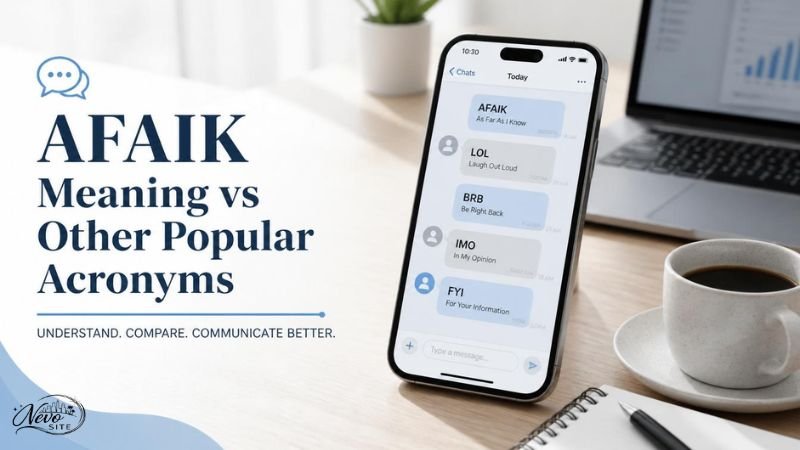
The Afaik meaning is often compared with other popular internet abbreviations. While many acronyms look similar, they serve different purposes in online communication. Understanding these differences helps you choose the right term in the right situation.
Many users see AFAIK Meaning alongside terms like IDK (I Don’t Know), IMO (In My Opinion), and FYI (For Your Information). Learning how each one works can improve your texting language and make your messages more accurate.
| Acronym | Full Form | Meaning | Usage |
| AFAIK | As Far As I Know | Limited knowledge | Sharing uncertain information |
| IDK | I Don’t Know | No knowledge | Admitting you don’t know |
| IMO | In My Opinion | Personal opinion | Expressing views |
| IIRC | If I Recall Correctly | Based on memory | Remembering information |
| FYI | For Your Information | Informative message | Sharing facts |
| AFK | Away From Keyboard | Not available | Leaving a chat |
AFAIK vs IDK
AFAIK and IDK (I Don’t Know) are different. AFAIK means you know something but are not completely sure. IDK means you do not know the answer at all.
For example, “AFAIK, the meeting is tomorrow” shows partial knowledge. “IDK when the meeting is” shows no knowledge.
AFAIK vs IMO
AFAIK focuses on knowledge, while IMO (In My Opinion) focuses on personal views. One is about information, and the other is about opinion.
For example, “AFAIK, the product launches next week” shares information. “IMO, the product looks great” shares a personal opinion.
AFAIK vs IIRC
AFAIK is based on current knowledge. IIRC (If I Recall Correctly) is based on memory.
People use IIRC when they remember something from the past. AFAIK is broader and can be used in more situations.
AFAIK vs FYI
AFAIK shows uncertainty. FYI (For Your Information) simply provides information without expressing doubt.
Someone saying “FYI, the office closes at 5 PM” sounds certain. AFAIK suggests that the information may need confirmation.
AFAIK vs AFK
AFAIK and AFK are completely different terms. AFK means “Away From Keyboard” and indicates that someone is temporarily unavailable.
AFAIK relates to knowledge and information. AFK relates to a person’s online status.
19. Similar Slang Terms to AFAIK
The Afaik meaning belongs to a large family of internet abbreviations. Many similar terms help users communicate quickly in chats and social media.
These expressions are common in digital communication, messaging apps, and online communities. Knowing them can improve your understanding of internet culture.
| Slang Term | Full Form | Purpose |
| IMO | In My Opinion | Express opinions |
| TBH | To Be Honest | Share honest thoughts |
| IIRC | If I Recall Correctly | Refer to memory |
| FYI | For Your Information | Share information |
| IMHO | In My Humble Opinion | Express opinions politely |
IMO
IMO (In My Opinion) is used when sharing personal thoughts. It helps separate opinions from facts.
People often use IMO in reviews, discussions, and social media comments.
TBH
TBH (To Be Honest) is used when someone wants to be open and direct. It often introduces a sincere statement.
The phrase is common among younger internet users and social media communities.
IIRC
IIRC (If I Recall Correctly) is useful when relying on memory. It tells readers that the information may not be perfectly accurate.
Like AFAIK, it adds a level of uncertainty to a statement.
FYI
FYI (For Your Information) is one of the most common online abbreviations. It is used to provide helpful facts or updates.
Unlike AFAIK, FYI does not suggest uncertainty.
IMHO
IMHO (In My Humble Opinion) is a polite version of IMO. It allows people to express opinions while sounding less forceful.
This phrase is often used in friendly discussions and forums.
20. Is AFAIK Meaning Safe for Kids and Teens?
The Afaik meaning is completely safe for children and teenagers. It contains no offensive language and is commonly used in everyday online conversations.
Many young people encounter AFAIK while using social media, games, or messaging apps. It is considered a harmless and educational abbreviation.
AFAIK Meaning for Kids
For kids, AFAIK simply means “As Far As I Know.” It teaches them to communicate honestly when they are not completely sure about something.
This can encourage responsible communication and reduce the spread of incorrect information.
Safe Usage
Parents generally do not need to worry about AFAIK. It is a neutral expression that promotes honesty and transparency.
Reasons AFAIK is safe:
- No offensive meaning
- No hidden message
- Encourages honesty
- Easy to understand
- Commonly used online
21. How Parents Can Understand AFAIK Usage
Parents often see unfamiliar abbreviations in their children’s messages. Understanding the Afaik meaning can help them feel more comfortable with modern online messaging habits.
Most internet abbreviations are harmless. Learning common terms helps parents better understand digital conversations.
Teen Communication
Teenagers use abbreviations to communicate quickly. AFAIK is simply one of many shortcuts used in texting and social media.
It usually appears when a teen is sharing information but is not fully certain about it.
Monitoring Slang Usage
Parents should focus on understanding context rather than worrying about every abbreviation. Most uses of AFAIK are completely harmless.
Helpful tips for parents:
- Learn common abbreviations
- Ask questions calmly
- Understand context
- Stay informed about trends
- Encourage open communication
- Discuss online safety
22. Benefits of Using AFAIK
The Afaik meaning offers several communication benefits. It helps people share information responsibly while acknowledging uncertainty.
This small phrase plays a big role in making conversations more accurate and respectful.
Clarity
AFAIK improves clarity by showing the limits of a person’s knowledge. Readers immediately understand that the information may need verification.
This reduces confusion and helps set realistic expectations.
Transparency
Using AFAIK demonstrates transparency. It shows that the speaker is being honest about what they know and do not know.
Transparency often leads to better communication outcomes.
Honesty
Honesty is one of the biggest advantages of AFAIK. It prevents people from presenting assumptions as confirmed facts.
This creates more responsible and trustworthy discussions.
Better Discussions
Conversations become more productive when people acknowledge uncertainty. AFAIK encourages cooperation rather than arguments.
Benefits of AFAIK:
- Improves clarity
- Encourages honesty
- Builds trust
- Shows transparency
- Reduces confusion
- Supports healthy discussions
- Promotes accuracy
- Prevents misinformation
- Encourages participation
- Improves communication quality
23. How AFAIK Improves Communication
The Afaik meaning helps people communicate more effectively. It allows users to share information while remaining open to corrections and updates.
This approach makes discussions feel more balanced and respectful. It also helps avoid unnecessary misunderstandings.
Reduces Conflict
Many online arguments begin when opinions are presented as facts. AFAIK reduces this problem by clearly indicating uncertainty.
People are often more willing to engage respectfully when information is presented carefully.
Encourages Accuracy
AFAIK reminds users that facts should be verified. This encourages a culture of accuracy and responsible information sharing.
As a result, conversations become more reliable and informative.
Improves Trust
Trust grows when people communicate honestly. AFAIK shows that a person is willing to admit the limits of their knowledge.
This simple phrase can make conversations feel more authentic and trustworthy.
24. Modern Usage Trends of AFAIK Meaning in 2026
The Afaik meaning remains highly relevant in 2026. It continues to appear across social media platforms, messaging apps, and online communities.
As digital conversations grow, users still prefer abbreviations that save time while maintaining clarity. AFAIK remains one of the most recognized examples of internet slang.
Social Media
Social media users frequently include AFAIK in comments and discussion threads. It helps express information without sounding overly certain.
The abbreviation remains popular because it is short, practical, and easy to understand.
Messaging Apps
Messaging apps continue to drive the popularity of internet abbreviations. AFAIK fits naturally into fast-moving conversations.
Its role in social media communication and private chats remains strong.
Online Communities
Online communities and forums still rely on AFAIK when discussing topics that require clarification or personal knowledge.
The phrase continues to support respectful and accurate communication among users.
| Platform Type | Estimated Usage Trend (2026) |
| Social Media | Very High |
| Messaging Apps | Very High |
| Online Forums | High |
| Gaming Communities | High |
| Workplace Chats | Moderate |
| Email Communication | Moderate |
25. Is AFAIK Meaning Still Popular Today?
The Afaik meaning remains popular in 2026. Millions of people still use it in texts, social media posts, and online chats. It is simple, short, and easy to understand.
As online communication continues to grow, abbreviations like AFAIK help people communicate quickly. It remains a familiar term across different age groups and online communities.
Current Popularity
Today, AFAIK, meaning appears on many digital platforms. Users rely on it when sharing information that may not be fully confirmed.
The phrase remains common because it promotes honesty. It allows people to express uncertainty without sounding uninformed.
Future Relevance
AFAIK is likely to stay relevant for years to come. New internet users continue to learn and adopt common abbreviations.
As texting language evolves, AFAIK remains useful because its meaning is clear and practical. Its simplicity helps ensure long-term popularity.
Reasons AFAIK Meaning remain popular:
- Easy to understand
- Saves typing time
- Shows honesty
- Works across platforms
- Fits modern communication
26. Common Platforms Where AFAIK Meaning Is Used
The Afaik meaning can be found on many websites and apps. It has become a regular part of digital communication and everyday online conversations.
People use AFAIK wherever quick and informal messaging is common. Its flexibility makes it useful across many platforms.
WhatsApp users often use AFAIK Meaning in private chats and group conversations. It helps share information without claiming complete certainty.
The abbreviation is especially useful when discussing plans, events, or updates with friends and family.
Facebook users frequently use AFAIK Meaning in comments and community groups. It allows people to participate in discussions while remaining open to corrections.
This creates more balanced and respectful conversations among users.
On Instagram, AFAIK Meaning often appears in comments and direct messages. Users employ it when discussing trends, products, or shared experiences.
It fits naturally into casual social interactions.
Reddit discussions often involve questions and detailed answers. AFAIK helps users share knowledge while acknowledging possible limitations.
Many subreddit communities encourage this type of honest communication.
Discord
Discord users regularly use AFAIK in gaming servers and community channels. It is helpful when discussing updates, strategies, or announcements.
The abbreviation supports fast and effective communication.
X (Twitter)
On X, short messages are important. AFAIK allows users to communicate uncertainty without using many characters.
Its compact format makes it perfect for quick public discussions.
27. Examples of AFAIK Meaning in Different Situations
The Afaik meaning becomes easier to understand when viewed in real-life situations. Different environments require different communication styles.
AFAIK, it works well because it can be used in many everyday conversations. It helps people share information while remaining honest about uncertainty.
Family
Family members often use AFAIK when discussing plans or schedules.
Examples:
- AFAIK, dinner starts at 7 PM.
- AFAIK, Mom is still at work.
- AFAIK, the guests are arriving tomorrow.
School
Students may use AFAIK when discussing assignments or school activities.
Examples:
- AFAIK, the test is on Friday.
- AFAIK, the teacher approved it.
- AFAIK, class starts at 9 AM.
Work
Workplace conversations sometimes involve incomplete information. AFAIK Meaning helps employees communicate responsibly.
Examples:
- AFAIK, the report is finished.
- AFAIK, the client approved the plan.
- AFAIK, the meeting remains scheduled.
Community
Community discussions often involve shared information and updates.
Examples:
- AFAIK, the event is free.
- AFAIK, registration is still open.
- AFAIK, volunteers are still needed.
Gaming
Gaming communities frequently use abbreviations and short forms.
Examples:
- AFAIK, the update launches tomorrow.
- AFAIK, the server is online.
- AFAIK, the event rewards are available.
Final Thoughts
Understanding the Afaik meaning can make your online conversations clearer and more effective. This popular AFAIK acronym is widely used in online communication to share information without sounding completely certain. It helps people communicate honestly and politely while taking part in discussions across different platforms and communities.
Today, the AFAIK meaning in texting remains an important part of texting language and modern internet slang. Whether you are chatting with friends, posting on social media, or joining online discussions, AFAIK helps you express your limited knowledge simply. Learning this term can improve your confidence in digital communication.
FAQs
What does AFAIK mean?
AFAIK stands for “As Far As I Know.” It is a common internet acronym used to share information while indicating that the speaker may not know every detail.
When should I use AFAIK?
You can use AFAIK in text messages, online chats, emails, forums, and social media when you want to express information based on your current knowledge.
Is AFAIK a formal abbreviation?
No, AFAIK is generally considered an informal abbreviation and is best suited for casual conversations rather than professional or academic writing.
Why do people use AFAIK?
People use AFAIK to show uncertainty and avoid presenting information as an absolute fact. It promotes clear communication and honesty.
Can AFAIK be used in business emails?
While it can appear in informal workplace communication, it’s better to write “as far as I know” in formal business correspondence for clarity.
What are some alternatives to AFAIK?
Common alternatives include “to my knowledge,” “as far as I’m aware,” “I believe,” and “from what I know.”
Is AFAIK widely used on social media?
Yes, AFAIK, is popular on social media platforms, discussion boards, online communities, and messaging apps because it saves time and space.
Can AFAIK be written in lowercase?
Yes, you can write it as AFAIK or afaik. Both forms have the same meaning in digital communication and casual conversations
Is AFAIK used worldwide?
Yes, English speakers around the world use AFAIK in online communication, internet slang, and texting culture to express limited knowledge.
What is the main purpose of AFAIK?
The main purpose of AFAIK is to share information while acknowledging that it is based on your current understanding, helping maintain accuracy, transparency, and responsible communication.

Written by Saeeda Gull Welcome to Neto Site! I am Saeeda Gull, a SEO Content Writer and SEO specialist.With over 1 year of experience, I create meaningful, engaging, and high-quality digital content that connects with readers and ranks well online.
3 thoughts on “27 Powerful AFAIK Meaning Explained Uses, Examples & Tips (2026)”