

Confused by Internet Slang Dictionary terms like IDK, TBH, NGL, or LOL when they appear in a text message or social media comment? You are not alone. Online conversations often include texting slang, social media slang, internet acronyms, chat abbreviations, Gen Z slang, viral slang, and other online expressions that can be difficult to understand without context.
This Internet Slang Dictionary brings common slang terms together in one easy-to-use resource. You will learn what popular internet slang means, where it is used, how context can affect its meaning or tone, and how these terms appear in real online conversations. Whether you are trying to understand a text, comment, group chat, or social media post, this guide can help you understand online language more confidently.
What Is an Internet Slang Dictionary?
Internet slang refers to informal words, phrases, abbreviations, and expressions used in online communication. An Internet Slang Dictionary is a useful reference that helps readers understand these terms when they appear in text messages, group chats, comments, forums, and social media posts.
People use internet slang to make conversations shorter, more casual, expressive, and relatable. This dictionary brings common texting slang, chat abbreviations, internet acronyms, and social media slang together in one place, with simple meanings and examples to help readers understand how these terms are used.
How Is Internet Slang Used Online?
Internet slang is commonly used in text messages, social media posts, comments, group chats, forums, and gaming communities. Terms such as IDK, LOL, TBH, and NGL help people communicate reactions, opinions, and feelings quickly in casual online conversations.
Why Do People Use Internet Slang?
People use internet slang to save time, express emotions, keep conversations casual, and connect with online communities. Short forms can make messages feel more natural and relatable, especially when people are chatting with friends or participating in social media conversations.
Internet Slang vs. Formal Language
Internet slang is generally more casual and conversational than formal language. It is common in personal messages and social media, while formal language is usually better for professional emails, academic writing, and official communication.
How Internet Slang Has Changed Over Time
Internet slang has evolved from simple chat abbreviations into a wide range of informal words, phrases, and expressions used across texting, social media, memes, gaming, and online communities. As online platforms have changed, new slang has become easier to create, share, and spread.
Today, internet slang meanings can change quickly as expressions move between different platforms and communities. Memes, viral trends, creators, and online conversations can give words new meanings or make new expressions popular. This is why an Internet Slang Dictionary needs regular updates.
Early Internet and Chat Slang
Early internet slang became popular through chat rooms, online forums, and instant messaging, where people wanted to communicate quickly. Terms such as BRB, LOL, and ASAP helped users shorten messages and became familiar parts of early online communication.
The Rise of Texting Slang
As mobile phones and text messaging became more common, shortened language moved into everyday conversations. Terms such as IDK, IKR, TBH, and NGL became popular in casual texts and later appeared across social media, group chats, and online communities.
Social Media and Viral Slang
Social media made it much easier for slang to spread to large audiences. Platforms such as TikTok, Instagram, and Snapchat can quickly turn a word or expression from a video, meme, comment, or caption into a widely recognized part of online communication.
How New Slang Spreads Online
New internet slang can spread through social media posts, memes, creators, influencers, gaming spaces, and online communities. When people repeatedly see and use an expression, it can move from one community to another and eventually become familiar in everyday texting and online conversations.
Why Internet Slang Keeps Changing
Internet slang keeps changing because online platforms, communities, trends, and communication habits continue to evolve. Some expressions remain popular for years, while others fade quickly. Regular updates help an internet slang dictionary stay useful as new terms appear and older ones change.
Main Types of Internet Slang
Internet slang can be grouped into different types based on where it is used, how it is written, and the communities that use it. These categories help readers understand why certain terms are common in texting, social media, gaming, or online communities.
This Internet Slang Dictionary covers the main types, including texting slang, social media slang, internet acronyms, Gen Z and viral slang, and chat and gaming slang. Some terms may fit into more than one category because internet language often overlaps across platforms.
Texting Slang
Texting slang includes short words, abbreviations, and expressions commonly used in text messages and private chats. Terms such as IDK, IKR, TBH, NGL, and BRB help people communicate quickly while keeping conversations casual.
Social Media Slang
Social media slang includes words, phrases, and abbreviations used in posts, captions, comments, and direct messages. These terms can spread quickly across platforms such as TikTok, Instagram, Snapchat, and Facebook and may later appear in everyday texting.
Internet Acronyms
Internet acronyms are shortened forms created from the initial letters of words or phrases. Common examples include LOL, ASAP, FYI, and BTW, which make casual online communication shorter and easier to type.
Gen Z & Viral Slang
Gen Z and viral slang include expressions that become popular through social media, memes, videos, creators, and online communities. Some terms spread widely, while others remain connected to a specific trend or community and may change in popularity over time.
Chat and Gaming Slang
Chat and gaming slang is commonly used in multiplayer games, livestreams, Discord servers, and online communities. It can include abbreviations, reactions, commands, and community-specific expressions, with some terms eventually becoming part of wider internet culture.
A–Z Internet Slang Dictionary
The A–Z Internet Slang Dictionary brings common internet slang terms, texting abbreviations, and online expressions together in alphabetical order. Each entry provides a short meaning and a natural example to help you understand how the term is used in online conversations.
When a term has a dedicated NevoSite guide, you can follow the Learn more link for a deeper explanation, additional meanings, examples, and usage tips. Terms with more than one common meaning are identified as context-dependent rather than being given an unsupported definition.
A: Slang Terms & Meanings
AFAIK: As far as I know; used when sharing information while showing that you may not be completely certain.
Example: “AFAIK, the store closes at 9.”
Learn more: AFAIK Meaning in Text
B: Slang Terms & Meanings
No verified NevoSite term has been added to this section yet.
C: Slang Terms & Meanings
CBFW: A context-dependent internet abbreviation with no sufficiently standardized primary meaning.
Example: “I saw CBFW in a comment and wasn’t sure what it meant.”
CHUZZ: Internet slang associated with an unattractive or ugly person.
Example: “The comment used chuzz as an insult.”
Learn more: CHUZZ Meaning in Text
CLFS: A context-dependent abbreviation without one sufficiently standardized meaning.
Example: “I saw CLFS in a message and needed more context.”
Learn more: CLFS Meaning in Text
CTFU: An informal abbreviation used to show that something is extremely funny.
Example: “That video had me CTFU.”
Learn more: CTFU Meaning in Text
D: Slang Terms & Meanings
DSL: A context-dependent abbreviation; in slang, it can have a different meaning from the technology-related term.
Example: “I saw DSL used in a slang comment.”
Learn more: DSL Meaning in Slang
DTB: Don’t text back; used in some casual texting contexts to tell someone not to reply.
Example: “I’m going into a meeting, DTB.”
Learn more: DTB Meaning in Texting and Social Media
DTM: Doing too much; used to say that someone is overreacting or taking something too far.
Example: “You’re DTM over a small mistake.”
Learn more: DTM Meaning in Text
E: Slang Terms & Meanings
No verified NevoSite term has been added to this section yet.
F: Slang Terms & Meanings
FN: A context-dependent abbreviation; it can mean “for now” in ordinary texting and may have other meanings in specific contexts.
Example: “I’m staying home FN.”
Learn more: FN Meaning in Text
FRL: For real; used to emphasize agreement, seriousness, or that something is true.
Example: “FRL, that was an amazing game.”
Learn more: FRL Meaning in Text
G: Slang Terms & Meanings
GYAITMFHRNBIBYA: A long and highly informal internet abbreviation used in casual online communication.
Example: “That GYAITMFHRNBIBYA abbreviation is difficult to understand.”
Learn more: GYAITMFHRNBIBYA Meaning
H: Slang Terms & Meanings
No verified NevoSite term has been added to this section yet.
I: Slang Terms & Meanings
ICL: I can’t lie; used to introduce an honest opinion or admission.
Example: “ICL, that was better than I expected.”
Learn more: ICL Meaning in Text
IHH: An informal online expression whose meaning can depend on context and tone.
Example: “IHH, I didn’t know that.”
Learn more: IHH Meaning in Text
IONK: I don’t know; a casual phonetic-style form used in texting and online conversations.
Example: “IONK what happened.”
Learn more: IONK Meaning in Text
IYK: A context-dependent internet abbreviation whose meaning should be interpreted from the surrounding conversation.
Example: “I saw IYK in a comment but needed more context.”
Learn more: IYK Meaning in Text
J: Slang Terms & Meanings
JP: A context-dependent internet abbreviation with more than one possible interpretation.
Example: “I wasn’t sure what JP meant in that message.”
Learn more: JP Meaning in Text
JSP: A context-dependent abbreviation with more than one possible meaning.
Example: “I saw JSP in a text message and checked the context.”
Learn more: JSP Meaning in Text
K: Slang Terms & Meanings
No verified NevoSite term has been added to this section yet.
L: Slang Terms & Meanings
LMS: A context-dependent abbreviation; it can refer to different phrases depending on the platform or conversation.
Example: “I saw LMS in a social media post.”
Learn more: LMS Meaning in Text
LWK: Lowkey; used to describe something subtle, somewhat, or not openly emphasized.
Example: “I LWK like this song.”
Learn more: LWK Meaning in Text
M: Slang Terms & Meanings
ML: A context-dependent abbreviation with multiple possible meanings in online conversations.
Example: “I wasn’t sure what ML meant in that chat.”
Learn more: ML Meaning in Text
MYF: A context-dependent abbreviation with more than one possible meaning.
Example: “I saw MYF in a message and checked the conversation for context.”
Learn more: MYF Meaning in Text
N: Slang Terms & Meanings
NFS: A context-dependent abbreviation; it can have different meanings in casual conversations, social media, and buying or selling contexts.
Example: “The post said NFS, but I had to check the context.”
Learn more: NFS Meaning in Text
O: Slang Terms & Meanings
ONB: On bro; used in informal conversations to emphasize that someone is being serious or truthful.
Example: “ONB, I’m telling the truth.”
Learn more: ONB Meaning in Text
P: Slang Terms & Meanings
PTSO: Put That Sh*t On; an informal slang expression used to compliment someone’s outfit or style.
Example: “PTSO, that outfit looks amazing.”
Learn more: PTSO Meaning in Text
Q: Slang Terms & Meanings
No verified NevoSite term has been added to this section yet.
R: Slang Terms & Meanings
No verified NevoSite term has been added to this section yet.
S: Slang Terms & Meanings
SMH: Shaking my head; commonly used to express disappointment, disbelief, or frustration.
Example: “SMH, I can’t believe you forgot.”
Learn more: SMH Meaning in Slang
SPWM: Stop playing with me; used to show disbelief, seriousness, or frustration when someone appears to be joking or not being truthful.
Example: “SPWM, are you serious right now?”
Learn more: SPWM Meaning in Text
SYD: A context-dependent abbreviation whose meaning can vary depending on the conversation.
Example: “I saw SYD in a message but needed more context.”
Learn more: SYD Meaning in Text
T: Slang Terms & Meanings
TB: A context-dependent abbreviation that can have different meanings in online conversations.
Example: “I saw TB in the group chat.”
Learn more: TB Meaning in Text Messages
U: Slang Terms & Meanings
No verified NevoSite term has been added to this section yet.
V: Slang Terms & Meanings
No verified NevoSite term has been added to this section yet.
W: Slang Terms & Meanings
WBY: What about you?; used to ask the other person the same question in return.
Example: “I’m doing good. WBY?”
Learn more: WBY Meaning in Text
WND: A context-dependent abbreviation without a sufficiently standardized primary slang meaning.
Example: “I saw WND in a message and needed more context.”
Learn more: WND Meaning in Text
WTV: Whatever; often used to show indifference or that something does not matter.
Example: “WTV, it’s your choice.”
Learn more: WTV Meaning in Text
WYO: What you on?; a casual way to ask what someone is doing or what they are up to.
Example: “WYO tonight?”
Learn more: WYO Meaning in Text
WYFF: A context-dependent texting abbreviation, commonly interpreted as “What you finna do?” in some online conversations.
Example: “WYFF tonight?”
Learn more: WYFF Meaning in Text
WYLL: What you look like? Commonly used online when asking someone what they look like or requesting a photo.
Example: “WYLL? Send me a pic.”
Learn more: WYLL Meaning in Text
X: Slang Terms & Meanings
No verified NevoSite term has been added to this section yet.
Y: Slang Terms & Meanings
YN: A context-dependent internet abbreviation with different possible uses.
Example: “I saw YN in a social media comment and checked the context.”
Learn more: YN Meaning in Modern Slang
Z: Slang Terms & Meanings
No verified NevoSite term has been added to this section yet.
Numeric Internet Slang
1437: I love you forever; a number-based expression used in informal digital communication.
Example: “Goodnight ❤️ 1437.”
Learn more: 1437 Meaning in Text
Why This A–Z Format Works
This A–Z format uses short, clear definitions to keep the pillar page easy to scan while allowing dedicated NevoSite guides to provide more detailed explanations. Context-dependent meanings are clearly identified instead of being presented as universal definitions. As new verified slang guides are published, additional terms can be added to the appropriate letter.
Common Texting Slang and Abbreviations
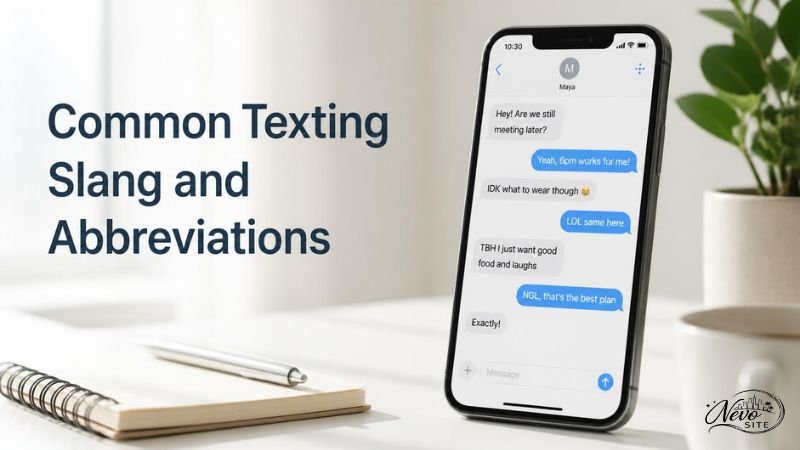
Texting slang and abbreviations help people communicate quickly in text messages, group chats, and messaging apps. They include short forms, acronyms, shortened words, and informal expressions that make casual conversations easier and more natural.
Some texting terms are widely recognized, while others may be less common or have different meanings depending on the context, platform, and conversation.
Popular Texting Acronyms
Texting acronyms use a few letters to represent longer words or phrases. They are commonly used to express opinions, reactions, questions, feelings, or other ideas quickly. Examples include IDK, IKR, TBH, and NGL, which are mainly used in casual texting and online conversations.
Common Chat Shortcuts
Chat shortcuts are shortened forms that help people type and respond faster, especially in group chats, direct messages, and everyday text conversations. For example, WBY can mean “what about you?” and WTV can mean “whatever.” You can also explore our guides on WBY Meaning in Text and WTV Meaning in Text for more detailed explanations.
Common Texting Expressions
Not all texting slang is a traditional acronym or abbreviation. Some terms work more like informal expressions, reactions, or conversational shortcuts. For example, IONK Meaning in Text explains a common way of expressing “I don’t know,” while IHH Meaning in Text covers another informal expression used in casual online conversations.
Other texting expressions can also have specific meanings depending on context. See our guides to WYLL Meaning in Text, MYF Meaning in Text, NFS Meaning in Text, and LWK Meaning in Text for more examples and usage details.
How to Understand Unfamiliar Texting Slang
If you see an unfamiliar slang term in a message, do not rely only on the letters themselves. Look at the full sentence, previous messages, platform, tone, and relationship between the people communicating. This context can help you understand the intended meaning and avoid misunderstandings.
Social Media Slang
Social media slang refers to informal words, phrases, abbreviations, and expressions used in posts, comments, captions, direct messages, Stories, and online communities. The slang people use can vary depending on the platform, audience, community, and current trends.
Some expressions are specific to one platform, while others spread across multiple social networks. A term that becomes popular through a viral video, meme, or online trend may later appear in texting, comments, and group chats.
TikTok Slang
TikTok slang often spreads through viral videos, comments, memes, sounds, trends, and creator communities. New expressions can gain attention quickly and may later appear on other platforms, although their popularity and meaning can change with the trend.
Instagram Slang
Instagram slang commonly appears in captions, comments, Stories, Reels, and direct messages. Many abbreviations and expressions overlap with texting and broader internet slang, so the same term may be used across different platforms.
Snapchat Slang
Snapchat slang is commonly used in Snaps, chats, Stories, and private conversations. Short forms and informal expressions are especially common between friends, but the meaning of an unfamiliar term can depend on the conversation and surrounding message.
Facebook and Messenger Slang
Facebook and Messenger slang includes abbreviations, reactions, shortened expressions, and informal language used in posts, comments, groups, and private messages. Because users come from different age groups and communities, both older and newer internet slang may appear.
Discord and Online Community Slang
Discord and online community slang is often used in servers, gaming chats, livestreams, and community discussions. Some expressions are specific to gaming or a particular community, while others are widely used across the internet.
How to Understand Social Media Slang
When you see an unfamiliar slang term, consider the full sentence, surrounding conversation, platform, and tone before deciding what it means. If a term has multiple meanings, the context can help you determine whether it is being used as an abbreviation, reaction, joke, trend, or community-specific expression.
Common Internet Acronyms
Internet acronyms are shortened forms of words or phrases commonly used in online communication. They appear in text messages, group chats, social media comments, posts, forums, gaming communities, and other casual digital conversations.
Common examples include LOL, IDK, TBH, AFAIK, and SMH. People use these short forms to share ideas, reactions, opinions, or feelings quickly. While many acronyms have familiar meanings, some can vary by context, so the surrounding conversation and platform can help clarify their intended meaning.
Everyday Internet Acronyms
Some internet acronyms are frequently used in everyday texting and online conversations. They provide quick ways to express common ideas or responses without typing a complete phrase.
- IDK: I don’t know.
- AFAIK: As far as I know.
- TBH: To be honest.
- NGL: Not gonna lie.
- BRB: Be right back.
- BTW: By the way.
- FYI: For your information.
- TTYL: Talk to you later.
Reaction and Conversation Acronyms
Some internet acronyms are mainly used to express humor, agreement, surprise, disbelief, or frustration. For example, LOL can show amusement, SMH can express disappointment or disbelief, IKR can show agreement, and OMG can express surprise.
For detailed explanations, readers can explore NevoSite’s guides to SMH Meaning in Slang and CTFU Meaning in Text.
Acronyms Used in Comments and Posts
Internet acronyms are also common in social media comments, captions, posts, forums, and online communities. Terms such as AFAIK, TBH, and SMH can help users share information, opinions, or reactions in a short and familiar way.
How to Understand Internet Acronyms
Not every internet acronym has one universal meaning. When an unfamiliar acronym appears, consider the surrounding conversation, platform, relationship between the people, message tone, and nearby words or emojis. Context can help you understand which meaning the sender intended.
Gen Z and Viral Internet Slang
Gen Z and viral internet slang includes words, phrases, abbreviations, and expressions that become popular through social media, memes, short videos, online communities, and digital conversations. Some terms are closely associated with younger online users, while others spread beyond their original communities and become widely recognized.
Viral slang can be short-lived, and its meaning, tone, or popularity may vary by platform and context. Understanding where and how a term is used can help you recognize newer expressions without assuming that every trending word has the same meaning everywhere online.
What Makes Slang Go Viral?
Slang can go viral when an expression is repeatedly shared and used across online communities. Social media posts, short videos, memes, creators, influencers, and comments can help a term move from a specific community to a much wider online audience.
Popular Gen Z Expressions
Gen Z slang is often used to express reactions, opinions, emotions, humor, agreement, or disagreement in casual conversations. Expressions such as “no cap,” “bet,” “sus,” and “mid” may appear in social media posts, comments, texts, and online communities, although their meaning and popularity can vary by context.
TikTok and Meme-Driven Slang
TikTok, memes, short-form videos, and viral content can introduce unfamiliar slang to large audiences. For example, Chuzz is a slang term you may encounter online. For its specific meaning and usage, see our detailed guide to Chuzz Meaning in Text.
Why Viral Slang Changes Quickly
Viral slang changes quickly because online trends, memes, creators, platforms, and communities are constantly changing. Some expressions remain popular for years, while others fade when the trend or meme behind them loses attention. This is why an Internet Slang Dictionary should be updated regularly.
Internet Slang Examples in Real Conversations
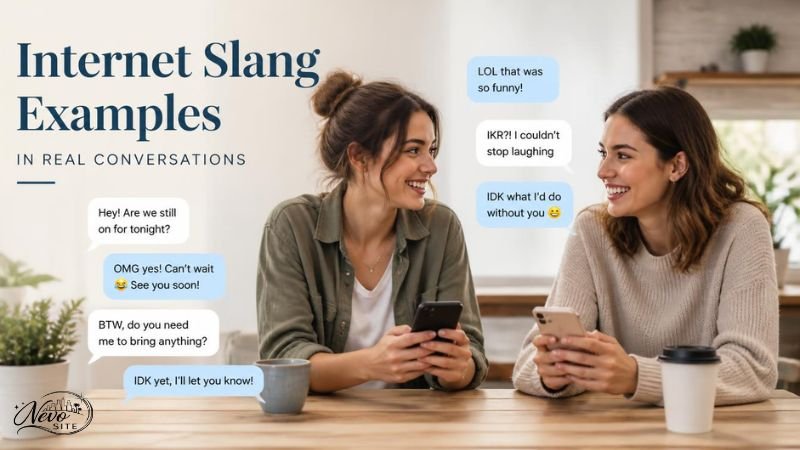
Seeing internet slang in real conversations can make unfamiliar terms easier to understand. The examples below show how texting slang, internet acronyms, abbreviations, and online expressions can appear naturally in text messages, group chats, social media comments, and casual conversations.
The meaning and tone of a slang term can depend on the context, platform, and relationship between the people communicating. These examples show common ways internet slang can be used in everyday online conversations.
Text Message Examples
Text messages often use short slang terms and abbreviations to keep casual conversations quick and natural. For example, IDK can show uncertainty, LOL can express amusement, and TBH can introduce an honest opinion.
Example:
Alex: Are you coming tonight?
Sam: IDK yet. I’ll let you know.
Group Chat Examples
Group chats often use short expressions because several people may be communicating at the same time. Terms such as WBY, NGL, and BRB can help users ask questions, share reactions, or briefly step away from the conversation.
Example:
Mia: Who’s joining the game tonight?
Jake: I’m in. WBY?
Social Media Comment Examples
Social media slang commonly appears in comments, replies, captions, and direct messages. Expressions such as FR, TBH, and IKR can help users show agreement, share an opinion, or react quickly to a post or video.
Example:
Comment: “This outfit is amazing!”
Reply: “FR! 🔥”
Friendly Online Conversations
Friends often use internet slang to make conversations feel relaxed and personal. For example, RN can refer to something happening now, while IONK can express uncertainty in a casual conversation.
Example:
A: What are you doing RN?
B: Just watching a movie.
What These Examples Show
These examples show how internet slang can make casual online communication shorter, faster, and more expressive. When you see an unfamiliar term, consider the full conversation, platform, and tone before deciding what it means.
How to Understand Internet Slang From Context
Internet slang does not always have one fixed meaning. A slang word, abbreviation, or internet acronym can mean different things depending on the conversation, platform, relationship, and tone. Looking at the surrounding messages can help you understand which meaning fits best.
When you see an unfamiliar term, do not rely on the abbreviation alone. Check the full conversation, consider where the term was used, and pay attention to the sender’s tone and relationship with you. If you are still unsure, look up the term in a reliable Internet Slang Dictionary.
Read the Whole Conversation
Read the messages before and after the slang term to understand its meaning and tone. For example, IDK usually means “I don’t know,” but the sender may use it as a genuine answer or simply as a short, casual response.
Consider the Platform
The platform can provide useful clues because different online communities may use different slang. A term commonly seen on TikTok, Instagram, Snapchat, Discord, gaming chats, or text messages may have a different level of familiarity or meaning elsewhere.
Consider Your Relationship With the Sender
Think about who sent the message and how you normally communicate with that person. Friends may use informal slang and jokes freely, while coworkers, teachers, customers, or unfamiliar people may use more formal language.
Pay Attention to Tone, Punctuation, and Emojis
Punctuation, capitalization, emojis, and surrounding words can help reveal the intended tone. For example, an expression followed by 😂 or 😭 may be playful or humorous, while the same expression in a serious conversation may have a different tone.
Check the Meaning Before Assuming
If a slang term is unclear, check its common meaning before making an assumption. Then compare that meaning with the conversation, platform, relationship, and tone to determine which interpretation makes the most sense.
Is Internet Slang Appropriate in Professional Communication?
Internet slang is mainly used in casual and informal communication, so it is not suitable for every situation. Whether you should use slang depends on the audience, relationship, workplace culture, and purpose of the message.
In professional communication, clear and respectful language is usually the safer choice. Understanding when internet slang is appropriate can help you avoid confusion, maintain a professional tone, and communicate more effectively.
When Casual Slang Is Acceptable
Casual internet slang may be acceptable when communicating with coworkers in a friendly, informal setting. Some workplaces also use relaxed language in internal chats, but it is still important to consider whether everyone understands the expression and whether it fits the situation.
When to Avoid Internet Slang
It is generally better to avoid internet slang in formal emails, job applications, academic assignments, official documents, and important client communications. For example, using “IDK” in a formal email may sound too casual, while “I’m not sure” is clearer and more professional.
Better Alternatives for Professional Messages
When a message requires a professional tone, replace highly casual slang with clear and direct wording. Common abbreviations may be acceptable in some workplaces, but when you are unsure, simple and professional language is usually the safer choice.
| Casual Expression | Professional Alternative |
| IDK | I’m not sure. |
| BTW | By the way. |
| ASAP | As soon as possible. |
| FYI | For your information. |
| LOL | That was funny. |
| TBH | To be honest. |
New Internet Slang Added in 2026
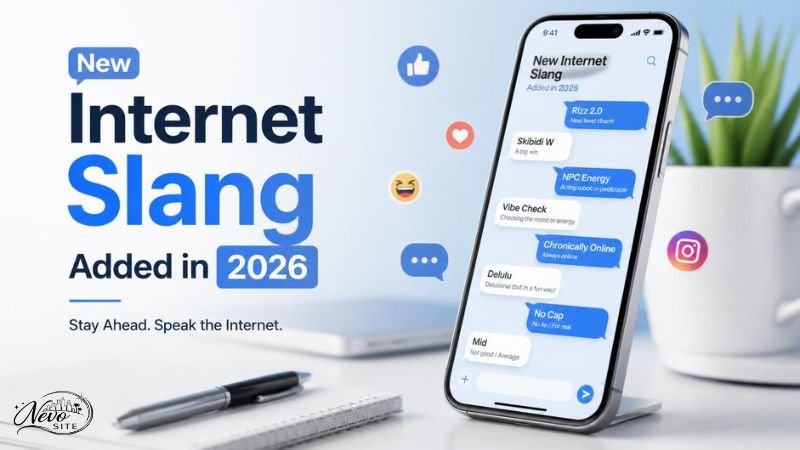
Internet slang continues to evolve as people create and share new words, abbreviations, phrases, and expressions across texting, social media, memes, gaming communities, and other online spaces. This section highlights terms that are relevant or useful for understanding online communication in 2026.
Not every new expression becomes widely used. Some terms may be common only on a specific platform, within a particular community, or among certain age groups. For this reason, this dictionary focuses on terms with a clear meaning, useful context, or noticeable relevance rather than labeling every new expression as viral or trending.
How We Choose New Internet Slang
New terms are considered based on their meaning, context, usefulness, and relevance to online communication. A term may be included when readers are likely to encounter it in texts, comments, social media posts, group chats, gaming communities, or other digital spaces.
2026 Internet Slang Updates
Internet slang continues to change as new words and expressions appear across social media, texting, gaming, memes, and online communities. This section is designed to highlight relevant internet slang that becomes established or useful for readers, while keeping definitions clear and easy to understand.
For each selected term, we can provide a short meaning, natural example, usage context, and a link to a detailed NevoSite guide when available. This helps readers understand not only what a slang term means, but also how it may be used in real online conversations.
How We Choose Internet Slang Updates
New terms are considered based on their relevance, online usage, clarity, and usefulness to readers. A term may be included when it appears across online conversations or becomes associated with a growing trend, platform, or community.
What to Expect in This Section
Each selected slang term may include a clear definition, real-world example, context, and related NevoSite guide when available. Because internet slang can vary by platform, community, age group, and location, meanings are explained with context rather than presented as universal definitions.
Editorial note: Internet slang changes quickly, and a term that is popular in one online community may be unfamiliar or less common elsewhere. Meanings and usage can also change over time, so this section will be reviewed and updated as relevant information becomes available.
How Internet Slang Changes Over Time
Internet slang is constantly evolving as online communities, social media trends, memes, and communication habits change. New words and expressions can become popular quickly, while older terms may become less common or develop different meanings.
Understanding these changes helps readers recognize unfamiliar internet slang words, texting abbreviations, and viral expressions. It also explains why an Internet Slang Dictionary needs regular updates as online language continues to develop.
Why New Slang Appears
New slang often develops when people create shorter, funnier, more creative, or more expressive ways to communicate. Memes, viral videos, gaming culture, online communities, and social trends can introduce expressions that later spread to a wider audience.
Why Some Slang Disappears
Some slang terms become less popular when the trend, meme, platform, or community that made them popular loses attention. Other terms remain recognizable but may become associated with an older style of online communication.
How Social Media Influences Language
Social media allows slang to move quickly between different online communities. A word or phrase used in a popular video, meme, comment, or post can spread across platforms and sometimes develop a different tone or meaning as more people use it.
How to Keep Up With New Slang
To understand unfamiliar slang, check the surrounding conversation, platform, and context before assuming its meaning. A regularly updated Internet Slang Dictionary can also help you understand new texting slang, social media terms, abbreviations, and viral expressions.
How to Use Internet Slang Naturally
Internet slang can make online conversations feel casual, friendly, and expressive, but it works best when you understand the term and use it in the right context. The goal is not to use as much slang as possible, but to choose expressions that fit the conversation and tone.
Before using slang, consider its meaning, your audience, and the situation. A term that sounds natural in a friendly group chat may feel confusing or inappropriate in a professional conversation. Using slang thoughtfully helps keep your messages clear and natural.
Know the Meaning First
Before using an internet slang term, make sure you understand its meaning and common usage. Some abbreviations can have different meanings depending on the context or online community, so checking the term first can help you avoid misunderstandings.
Match the Tone of the Conversation
Choose slang that matches the tone of the conversation. Casual expressions such as LOL may work naturally in a friendly group chat or social media comment, but the same expression may not fit a formal email or professional discussion.
Consider Your Audience
Think about who will read or receive your message before using internet slang. Friends and online communities may understand common abbreviations easily, while teachers, employers, clients, or unfamiliar readers may prefer clear and standard language.
Don’t Overuse Slang
Using too much slang can make a message difficult to understand or feel unnatural. A few familiar expressions can add personality and make conversations more relaxed, but standard words may be better when they communicate your meaning more clearly.
Use Slang According to the Context
The same slang term may feel natural in one situation but confusing in another. Consider the topic, platform, relationship, and overall tone before using an expression, especially when its meaning can change with context.
FAQs
What Is Internet Slang?
Internet slang is informal language used in online communication, including text messages, social media, group chats, forums, and gaming communities. It can include slang words, shortened phrases, abbreviations, acronyms, and informal expressions.
What Are Some Common Internet Slang Words?
Common internet slang terms include LOL, IDK, TBH, NGL, IKR, BRB, FR, and SMH. These terms are often used in casual online conversations, although their meaning and tone can depend on the context.
What Are Common Texting Slang Words?
Common texting slang includes IDK (I don’t know), TBH (to be honest), NGL (not gonna lie), IKR (I know, right?), and BRB (be right back). These short forms help people communicate quickly in casual text messages and chats.
What Are Internet Acronyms?
Internet acronyms are shortened forms created from the initial letters of words in a longer phrase. Examples include LOL, IDK, TBH, and BTW. They are commonly used in texting, social media, online chats, and other informal communication.
What Is the Difference Between Slang and an Acronym?
Slang is informal language that can include words, phrases, expressions, abbreviations, and acronyms. An acronym is a specific type of shortened form created from letters in a phrase. Therefore, an acronym can be used as slang, but not all slang is an acronym.
What Slang Is Popular on Social Media?
Social media slang includes abbreviations, viral expressions, memes, and terms associated with online communities. New expressions can spread through platforms such as TikTok, Instagram, Snapchat, Facebook, and Discord.
Because online trends change quickly, the popularity and meaning of some slang terms can also change over time.
What Is Gen Z Slang?
Gen Z slang refers to informal words and expressions commonly associated with younger internet users and online communities. Many terms spread through TikTok, memes, social media posts, videos, and group chats.
Some expressions become widely recognized, while others remain popular within particular online communities.
Why Does Internet Slang Change So Quickly?
Internet slang changes quickly because online language is influenced by social media trends, memes, creators, gaming communities, new platforms, and changing online culture. New expressions can spread rapidly, while older terms may gradually become less common.
This is why an internet slang dictionary needs regular updates to remain useful.
Is Internet Slang Appropriate in Professional Communication?
Internet slang is generally best suited to casual communication. In professional emails, academic writing, reports, and other formal situations, clear and standard language is usually a better choice unless the slang is appropriate for the audience and context.
Where Can I Find Internet Slang Meanings?
An internet slang dictionary can help you find quick definitions, examples, and related terms in one place. If you need more information about a specific expression, a dedicated slang guide can provide additional meanings, usage examples, tone, and context.
Final Thoughts
Internet slang is now a common part of online communication, from texting slang and social media expressions to internet acronyms, abbreviations, Gen Z slang, viral terms, and chat language. As online communication continues to change, understanding these terms can make messages, comments, and conversations easier to follow.
This Internet Slang Dictionary helps you find common slang terms, understand their meanings, and see how they are used in real conversations. For deeper explanations, explore the relevant NevoSite guides linked throughout the dictionary for specific meanings, examples, context, and practical usage tips.

Written by Saeeda Gull Welcome to Neto Site! I am Saeeda Gull, a SEO Content Writer and SEO specialist.With over 1 year of experience, I create meaningful, engaging, and high-quality digital content that connects with readers and ranks well online.
2 thoughts on “Ultimate Internet Slang Dictionary 2026: Modern Terms & Meanings ”